






Teaching kids to dress themselves

Teaching Kids to Dress Themselves

FAM, kids By March 20, 2011 Tags: , , , , , , , , , , , , , , No Comments

Teaching Kids to Dress Themselves will always be challenging.  But we bet you can make it fun too! “Don’t you love Katie’s outfit?” my girlfriend asked, “She dressed herself today.” At three, her daughter had proudly chosen a red shirt, blue pants, and to “match” them, one red sock and one blue one. Genius, I thought – both Katie’s choice and the fact that her mom chose not to “correct” her “out-of-the-box” approach. But what do we do with the child who resists dressing themselves, or for that matter the one who has trouble expressing themselves? Here are a few tips on how to allow your kids a little delight when it comes to self-adornment.

1) Don’t micro-manage. It doesn’t really matter whether we like their outfit as long as it does the job. If what they choose is inappropriate in some way, offer sensible guidance. It can feel overwhelming for a child to navigate their way through a series of decisions. Simplify their choices for them – okay, blue socks or green ones? Ramones shirt or Star Wars? After you guide them through the process a few times, they’ll know what to start with and how to put together an outfit. Limit their options. Offer one to three ensembles and have them mix and match. Start with velcro and snaps; move gradually to laces and zippers. Let them wear their shirt backwards or their sock inside out. Compliment them! A toddler with a sense of pride? Totally cute.

2) Make their clothing accessible. Hanging a row of hooks along a wall at about four feet up will be an easy way for kids to hang up and retrieve frequently used pants, skirts, sweaters, pyjamas and tees. Shoes and slippers can go underneath. Set up easy-to-reach cubbies with durable storage bins in them for other clothing and footwear. A bench is especially helpful to those who get wobbly while lifting a leg into pants, socks and such. Give each child their own hamper if you can. In a shared closet, a locker room look will be practical and encourage them to respect it as a communal space. Whatever works in your home for your kids!

3) If, like my almost four year-old, your little one CAN dress themselves but prefer not to, try to engage them in other ways. By asking my son to put on his own socks and then his little brother’s, he is given an opportunity to feel helpful, which for him is a motivator. Being the older child, he misses the attention his brother still gets when dressing; I often get down on the floor and have him sit with me while I lead him through the process. He feels supported but is still accomplishing the task himself. If resistance is an issue, figure out the source of it. Is your child afraid of something, or worried about making a “wrong” decision? Did they have a bad experience? Are they frustrated that they don’t know how to use a zipper? Be patient and allow them lots of time – rushing them will likely add to their stress.

4) Play dress-up! Keep a tickle trunk full of hats, tops and bottoms, costumes, socks, accessories and footwear. They can layer things as they like. Character play is loads of fun; each child can invent a personality, dress to develop them and then engage in a pretend tea party, pirate ship invasion or fire rescue mission. Go to the thrift store on a rainy day and have everyone choose a few things for the dress-up collection. Fun!

5) Lead by example. Set up your closet like a personal boutique. Keep the things you love on display or hang whole outfits up as visual cues. Let your kids hang out while you get ready for date night with your partner, but also try to have fun when you’re just heading out to the market. Allow yourself to be enchanted by…yourself. Yes, it’s kind of corny. Do it anyway. Let your kids see it! Encourage and offer ideas for creative expression. Even a simple flower stuck in a barrette or a pair of coloured shoelaces can make a kid feel like a rock star. Remember, too: you are the role model. Grown-ups really shouldn’t wear crotch-grazing skirts, lingerie as clothing or spandex outside of the gym. Equally true: five year-olds never look good in thigh-high boots, heavy makeup or painted-on jeans! There are so many ways to have fun with what we wear…don’t wreck it for your kids by giving clueless council! If you’re not sure about your fashion sense, find an episode or two of TLC’s “What Not To Wear” and pay close attention! Gotta love Stacy & Clinton…

Now, go play dress-up with your kids. Preschoolers with pinache? Heck yeah.

– Samantha Agar has two little boys who love to dress up as dinosaurs.

Share:

Caroline: Climbing my Mountain

Uncategorized By March 19, 2011 Tags: , , No Comments

Week four is about to start and I can’t believe it, where did time go? When I was chosen as one of the five finalists I thought to myself, wow 8 weeks, this is quite a mountain to climb but I need to climb it, I need to prove myself I can do it. Well I’m almost half way up the mountain and I thought that mountain use to look like Everest, it’s more like a small mountain now, the summit is right there.

Share:

Caroline: Challenges

Uncategorized By March 1, 2011 Tags: No Comments

I  have impressed myself a lot with this program, it is a good challenge and I love challenges. I followed the program every single day ever since I started. Sunday which was day 7, fatigue had caught up to me and it took quite a bit of will power to do the workout but I did it. My daughter’s been quite sick with a nasty cold and we’ve had some sleep issues with her, she kept us up many nights during this first week and I was and still am so tired. I just wanted to go nap after I put her down for her nap but I gave myself a kick in the butt and did the exercise. I love the after workout feeling and being proud of myself. I also wanted a cupcake real bad even though I’m not really into sweets and I admit, I had a few glasses of wine this weekend, I had to reward myself a bit! I am going to challenge myself  to try and wake up at 6 AM some days to do the workout because right now I do it when my daughter nap, I don’t get to do all the other things I use to do while she nap.

– Caroline Alarie

Share:
Quinoa and Butternut Squash Baby Food Recipe

Quinoa and Butternut Squash Baby Food Recipe

baby, EAT By March 1, 2011 Tags: , , No Comments

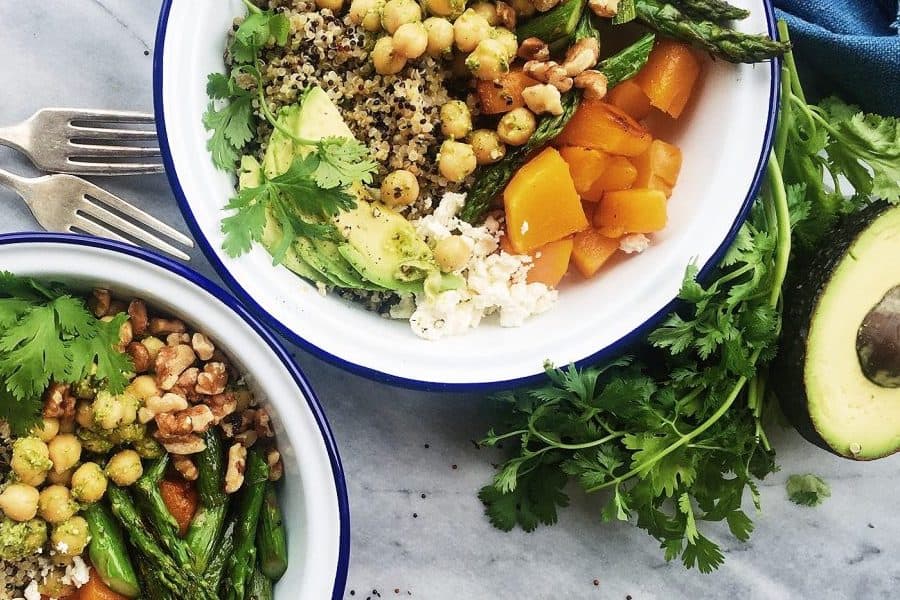
The nutty flavor and grainy texture of quinoa is delicious with the sweet juicy flesh of the squash, a combination popular in Peru, home territory to both of these ingredients. Quinoa was the staple grain food of the Incas of Peru – they call it the mother seed. Modern chemists identify it as being remarkably high in protein – particularly lysine, which is difficult to obtain in other vegetable source. It also supplies fiber, vitamins B and E, calcium, iron, magnesium and phosphorus.  This makes a delicious Quinoa and Butternut Squash Baby Food Recipe.

Quinoa and Butternut Squash Baby Food Recipe

1/2cup quinoa
Spring water
1- pound piece butternut squash or other yellow-fleshed squash

  • Put the quinoa grains in a small pan with enough spring water to cover by about 2 cm.
  • Bring to a boil, reduce and simmer for 15-20 minutes until the dark skins pop open, showing the pale insides.
  • Meanwhile peel the squash with a sharp knife, remove the fibers and seeds in the middle and cut up the flesh.
  • Stir the cut-up squash into the quinoa, let it bubble up, reduce the heat to a gentle simmer, tightly cover, and cook for 20- 25 minutes, until the grains are tender and translucent and the squash is completely soft.

Makes about 3 cups
Suitable for 9 months and on

Food Adventures – Elisabeth Luard & Frances Boswell
For 9 mos and up

Share:

Caroline: Out with the Black

Uncategorized By March 1, 2011 Tags: 5 Comments

We’re already starting week 3 of the program and it’s been a challenging adventure, but a challenge that I love. I am learning to eat better, not that I didn’t eat well, my husband and I are avid cooks. We make everything from scratch – salad dressings, stocks, etc… But I was eating portions that were too big, along with too much cheese and maybe a tad too much wine. When you think about it, even using the best ingredients plus a few glasses of wine and up goes the calories. So with this new way of eating I tell myself that I am training my stomach to be fine with eating smaller portions more often and so far my stomach is enjoying it. Sometimes I’m hungry but I’m sure soon enough it will all be well adjusted and balanced.

Share:
intravenous fentanyl

Intravenous fentanyl for pain relief during labour

FAM, pregnancy By February 26, 2011 Tags: , , , , No Comments


What is Intravenous Fentanyl?

It is a drug that is a powerful pain reliever (narcotic). It may be offered to you to help you cope better with the pain of labour. Some women say it takes the edge off the pain and helps them to cope better.  It will take the most of the pain away but not all of it.  We’ve gathered some Information about intravenous fentanyl so that you can make your labour decisions.

Doses that would take away all your labour pain would make you very sleepy and would decrease your ability to breathe.  This could be dangerous for you.

How is Fentanyl given?

It is given to you in a way so it is safe for you and your baby.

  • First your nurse puts a tube in your hand or arm called an intravenous or IV.
  • Your nurse, doctor, or midwife gives you the drug through this tube or you can give yourself this drug through the IV by using a pump that you control. It is called a patient-controlled pump. If you are using a pump you cannot give yourself too much of the drug because the pump is set to only allow safe doses.

Side effects of Fentanyl

  • You may become sleepy
  • Your breathing may slow down. Some women need to be given some oxygen and be watched closely if this happens.
  • You may feel sick to your stomach. This happens less often with Fentanyl than with other narcotics.
  • Fentanyl crosses the placenta and goes to your baby. As a result, your baby may be sleepy and not breathe well at birth.  If this happens your baby may be given a drug that helps called Naloxone. Naloxone is given to your baby by an injection into the muscle of her or his leg.  Sometimes, if you have needed a large dose of fentanyl, your baby’s breathing may have to be watched closely for several hours.
  • Your baby may have some trouble starting breastfeeding because she/he is sleepy and you may need more help to get your baby to breastfeed. Your nurse and/or lactation consultant will be able to help you get breastfeeding started.

What does is it not do?

  • Fentanyl will not take all your pain away.
  • Fentanyl does not give pain relief so your doctor/midwife can help your baby be born by the use of forceps or vacuum.
  • If your labour is very long it may not be as helpful later on as you may need a different form of pain relief.

BC Women’s Hospital & Health Centre
September 2006, BCW#766

Share:

Nita Lake Lodge

Canada, ROAM By February 22, 2011 Tags: , , , , , 1 Comment

They had me at the Land Rover shuttle.  Or was it the lobby?  Geothermal heating?  Or the live music during apres-ski?  Any of the above.  Nita Lake Lodge is among my favourite boutique hotels in the world.  And it’s only 68 minutes from Vancouver (not that I’m speeding).  Gourmet dining, windows galore and 72 environmentally-friendly suites with streamlined decor and beautiful views.

Share:

Little Stars Bedtime Cards

GEAR, toys By February 14, 2011 Tags: , , , , , No Comments

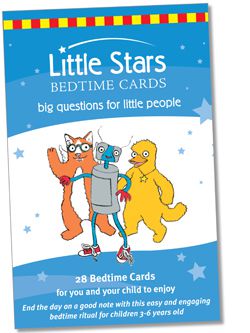
Every night before sleep, my son comes out with the most profound observations, and I cherish the time where we discuss the ups and downs of his day.  I’ve even noticed him waiting, clingy and quiet, until bedtime, and then spilling the beans.. “Nick made me feel bad today”.  “Guess what.. the teacher said that she was really proud of me for counting to ten.”  If I miss a couple of bedtimes, I suddenly feel disconnected.  But not all nights are easy, and the kids don’t always know how to express themselves.  That’s why we love Little Stars Bedtime Cards.  Given to me by a dear friend (and an amazing parent), these are designed to affirm positive qualities that already exist in your child. They help you to go beyond teaching and telling, to engaging and connecting with your child through the sharing of common positive experiences and emotions.

Share: