Browsing Articles Written by

Jill Amery

Jill Amery is a mom of 2 small boys and the Publisher of UrbanMommies, a stylish digital lifestyle magazine filled with fitness, style, health, recipes and savvy mom advice to help you through pregnancy, birth, and raising your kids.

McDonald's Beef Questions and Answers

EAT, family meals By December 28, 2011 Tags: , , , , , , , , , , , , , 3 Comments

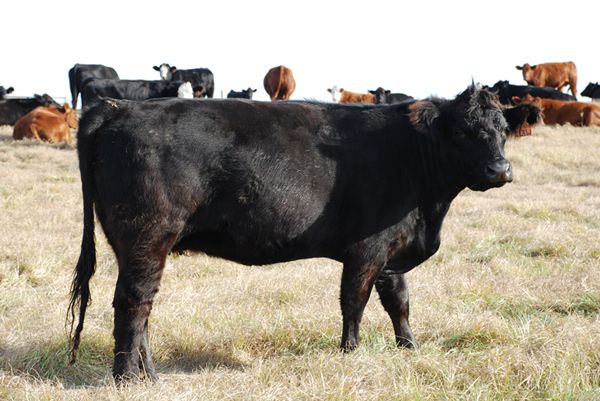
As many of our readers know, our publisher was chosen as a McDonald’s All-Access Mom, to see behind the scenes at McDonald’s Canada.  Yes, the experience included meeting and moo-ing at a bunch of cows, as well as a potato farm, chicken plant, restaurant visit, Hamburger University and head office.  As part of a promise to answer all of our readers’ questions, we’re publishing a Q and A for each trip.  Here’s the beef.  (More beef jokes in the main article on the trip).

Q. Do they use hormones in what the cattle are fed?

A.  Some farmers decide to use hormonal growth proponents and this is a business decision.  For the farmers, there are costs associated with the hormones, and they must weigh the cost/benefit for their business.

Q.  What are hormonal growth promotants?

A.  Hormonal growth promotants are in the form of naturally occurring sex hormones which are administered to animals in order to improve an animal’s ability to use nutrients efficiently.  Health Canada has approved three natural hormones and three synthetically produced hormones for use in cattle in Canada.

Q.  What benefit is there to using hormones?

A.  When these are used, the animal uses its feed much more efficiently.  This means that the meat will contain more lean meat and less fat in the end.  There can be more growth using less feed, resulting in less expensive beef for the consumer.

Q.  How does the Canadian Government monitor the use of growth hormones?

A.  In addition to the strict requirements which must be met in order to obtain approval to sell, and to use, growth promoting hormones in Canada, Canada’s national food safety agency, the Canadian Food Inspection Agency (CFIA), conducts regular monitoring programs in which thousands of samples of all meat products are analyzed to ensure that any drug residues which remain in meat are well within lawful, and safe, limits. Results of these monitoring programs are published regularly by the CFIA. Since residue levels of the natural hormones in beef are in the same range in both treated and untreated animals, Canadian regulatory authorities have concluded that it is not necessary to establish so-called safe limits of the natural hormones.  CFIA monitors for residues of the synthetic hormones and Canadian regulations do not permit residues of any of the synthetic hormones to be present in meat. And year after year, Canadian beef has been in virtually 100 per cent compliance, that is, there are no residues in the beef.

Q.  What about bacteria, Mad Cow Disease (BSE) and E. coli?

A.  BSE control and testing happens both on the farm (sick-looking animals are isolated and tested) as well as at McDonald’s-approved primary meat processing (ie. slaughterhouse) suppliers.  Canada does 40 times more than the global standard in terms of BSE prevention. Now, feed bans exist where the food chain is even more protected from contamination.  Recent cases of BSE existed in older animals that were alive prior to the feed ban. In the last 3 years, there have been more than 100,000 animals tested with only 3 positives.

Beef is tested for E. coli 0157:H7 before it arrives at the facility.  Any beef that tests positive for E. coli 0157:H7 never goes back into the McDonald’s food chain. In addition, the Cargill facility tests the incoming beef again for 0157:H7 as well as other types of bacteria according to the McDonald’s food safety standards.  Quality checks and tests are also done on the finished patties. Test results on every batch of patties are seen prior to any box being released via the distribution networks.

Q.  How do you make sure employees don’t lose their temper with animals at all stages of the process?

A.  The CFIA has a Code of Practice related to animal welfare.  In addition, there is a certified livestock transport program created by the Alberta Farm association to ensure humane treatment of animals.  At the primary processing facilities, everyone who works there all go through animal welfare training. There is 3rd party video monitoring at all primary processing facilities.  This technology can detect sharp movements and employees are always held accountable.  If any facility ever fails an audit, McDonald’s may disapprove them as a supplier of beef.

Q.  Is meat washed with ammonia?

A.  No.  Ammonia is only present within the refrigeration system to cool down the meat and never comes into contact with the meat itself.  The refrigeration system used to run on Freon and it is now run on ammonia.

For our publisher’s full article on McDonald’s beef, please see the All-Access Microsite.

Share:
Nanny Mary Poppins Responsibilities

The Nanny – Her Role and Responsibilities

LIVE, rest By December 27, 2011 Tags: , , , , , 3 Comments

Being a nanny is a career choice created in a grey zone. In Canada the role has been blurred significantly with the introduction of the “Live In Caregiver Program.”  Expectations on both the part of Employers and Nannies alike vary greatly. This miscommunication is the main cause for the high rate of disgruntled Nannies, disappointed employers and abandoned childcare contracts.

Share:
family travel tips

Family Travel Tips

LIVE, nourish, ROAM By December 27, 2011 Tags: , , , , , , , No Comments

If you are one of the very lucky to be headed anywhere on a family vacation, we have a few tips for you.  Planning ahead is definitely the cornerstone of traveling with kids.  That old Girl Guide/Boy Scout adage of ‘Being Prepared‘ can eliminate lots of stress… and there’s nothing quite like a good excuse to purchase mini makeup and a wrinkle-free dress for yourself..

Share:
Parenting New Years Resolutions

My New Years Parenting Resolutions

grow, LIVE By December 27, 2011 Tags: , No Comments

Sure, more cardio and less wine may top most of our New Year’s Resolution lists, but as parents, it donned on us that we could focus on enriching the growth of our children a bit more efficiently than we do now.  There aren’t enough hours in the day, and we often waste so many minutes.  When you set 5 or 10-minute daily goals, you can be a much more effective parent without tacking hours onto the day.  So don’t worry too much about breaking a sweat at the gym… here are the 2012 UrbanMommies parenting resolutions..

Share:

Unique School Fundraising Ideas

charity, FAM By December 3, 2011 Tags: , , , 7 Comments

Unique School Fundraising IdeasWith the government constantly cutting back school funding, it is up to parents and communities to raise significant parts of the the budget – particularly where sports, arts and playgrounds are concerned.  We interviewed Karey Heard, a mom of two and crackerjack fundraiser from Toronto, to provide us with some ideas.  If you can get a great fundraising team together, you can mix traditional fundraising initiatives with out-of-the box ideas.  Ultimately, the process will do more than raise money for your child’s school

Share:

The Final McDonald's All-Access Mom Trip

charity, FAM By November 27, 2011 Tags: , , , , , , 3 Comments

About to take off on my final journey I am quite sad, actually.  The whole experience as a McDonald’s All-Access Mom has been transformative, but not in any of the ways I expected.  Sure – lots of questions have been answered, I’ve traipsed around farms and plants (check out the videos), and worn way too many un-sexy lab coats.  But I also feel like a better mom.  A better citizen.  The corporate culture of McDonald’s and its suppliers is much friendlier – much more transparent, than I was expecting.  After almost 6 years of momm-ing, I think I’ve gotten a bit too insular.  Charity work had lapsed and a disconnection to the world and it’s news had set in.  The opportunity to participate in the MAAM program has helped change that.

I am most excited about seeing the Ronald McDonald House Charities.  Giving back.  Sharing.  Helping. These charities give homes and home cooked meals to families whose children are hospitalized with severe illness.  I will be spending a full day with the children and families involved in the London, Ontario house, learning about the program and more importantly, the people.  I hope that I can take the lessons of charity and giving back to my own children and incorporate them into our daily lives.  I know there has been criticism of the All-Access-Mom program, but this is an opportunity to get a glimpse into something that nobody could say McDonald’s doesn’t do really well.

The second part of the trip?  Chicken at the London, Ontario Cargill facility.  Shall I cluck like when I moo-ed at the cows?  Want to know the deal with the shaped McNuggets?  (I already asked about chicken lips and toenails getting into the mix.)  Nada.  Any other questions?  Reconstituted white meat?  Glue? Sawdust? Last chance!!

Share:

Aromatherapy and your children

FAM, kids By November 24, 2011 Tags: , , , , , , , , No Comments

Babies just love aromatherapy.  Imagine hearing the soft gentle sounds of a baby becoming calm again while lavender essential oil wafts through the air, or the feeling of a baby that just comes out of the bath all relaxed and ready to get into their pj’s to snuggle down for a sleep with the aroma of sweet orange and chamomile on their skin. Aromatherapy is a loving and wonderful way to introduce your children to the wonders of alternative health care and smells.

Aromatherapy and your children

Essential oils are composed of tiny little molecules that based on their composition tell us how they act on the body and mind. There is practically an aromatherapy recipe for any physical or emotional state. Below are a variety of ways to use the oils, as well as some simple everyday recipes and ideas on how to use the oils for your babies and children.

Some of the more common ways for using essential oils are;

  • Baths – add 1-3 drops of oil into the bath for children.  Add the oils after you have filled the tub to the desired amount and make sure you swish the oils and water together first before baby gets in.
  • Massage – add 1-3 drops of essential oil to 2 ounces of carrier or massage oil/cream.
  • Spritzer – add a total of 6-10 drops of essential oil to a 4 ounce bottle of water.
  • Vaporizer – add 4 drops of essential oil to most vaporizers or use a scent ball in the child’s room with the same amount of drops.
  • Diffuser – add 3-5 drops of essential oil into the diffuser for the size of an average child’s room.
  • Inhalation – for older children, (usually around 5 years) have them put their head over top of a bowl filled with hot water and 1-3 drops of essential oils to breath in the oils directly.  If you can get them to hold a towel over their heads that is even better, add the oils after you have added the water and have them to breathe in as soon as possible for best results.

Fun Aromatherapy Activities with children

  • To reduce hyper times and increase relaxation, create a spritzer with 5 drops of lavender, 4 drops of orange, and 3 drops of chamomile. Gently spray the oils over the top of your child’s head before naps or nighttime sleeps, or spray the room or car where you are spending most of your time.
  • For children over 1 year to help them sleep, you can add one drop of essential oil to their pillow or favorite stuffy that they go to bed with. Note this may stain your pillow case. A nice chamomile bath, 1 drop up to 2 years old, 2 drops up to 4 years old and 3 drops up to 8 years old will help baby sleep well.
  • If your child is getting a cold you can create a cold chest rub by adding 3 drops of eucalyptus, 2 drops of tea tree oil and one drop of lemon into 2 ounces of carrier oil or natural cream.  Massage the cream into their whole body, or for a quicker application, apply the rub on their chest, lower back and to the bottom of their feet.  Put their socks on to keep let the rub absorb into their feet.
  • When your child is around anyone with a virus or starts to shows signs of flu put thyme oil on the bottom of their feet. Add 1 drop for babies up to 2 years, 2 drops from 2-4 and after that 3 drops up till 8 years old.  Put the drops of thyme oil into a 2 ounce bottle of carrier oil or natural cream and apply strictly to the bottom of their feet and to wipe your hands off you can rub it along the lower part of your child’s back.

Young children are still building their immune system and we can help them by using essential oils in their everyday life.  Not only will essential oils help with your children’s immune systems but they can help with just their overall disposition, helping to keep them healthy, balanced, calm and relaxed through their growing and learning years.

Deborah Drummond Baker has been using and sharing the benefits of aromatherapy with her family and two children for over 15 years. She has extensive experience and certification in the alternative health field and has helped many mothers and fathers to use the essential oils in many ways with their children.Her first aroma baby is almost 14 years old and can attest to the wonders that aromatherapy has had for her. Deborah’s 3 year old is following in his big sisters footsteps of being taught the natural way to play with and benefit from the oils.

Share:

Beef Stroganoff with Ale

EAT, family meals By November 14, 2011 Tags: , , , , , , , 1 Comment

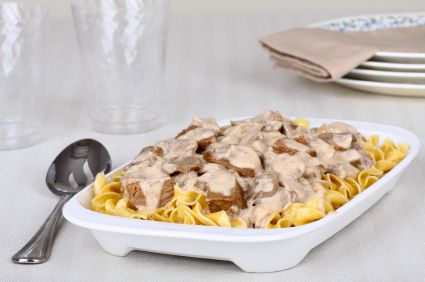
Remember the 70’s?  Stroganoff and egg noodles, baby!  Prepare this one while listening to disco, and make sure you explain 70’s fashion to your kids.  (With the intention of them never wanting to wear bell bottoms or anything orange and brown.)   Don’t worry.  We won’t ever share recipes involving sweet potatoes and marshmallows.

Sear the stewing steak (brown it in a pan).  Remove from pan.  Sautee chopped onion and sliced green and red peppers (and mushrooms if you like).  Once onions transluscent, return beef to pot.  Add 1 T. paprika, 1 T. mustard (dijon), 2 pints (cans) of ale (best are cream ales like Kilkenny, Caffreys, Boddingtons) and 1 pint beef stock.  Bring to boil.  Add a few dashes of Worcestershire sauce, salt and pepper.  Reduce to very low heat.  Add in sliced mushrooms, and optional: tomato puree (1 can).  Simmer 2 hours (until it tastes sweet), remove lid to reduce sauce to desired consistency.  Just before serving, you may optionally add 1 cup whipping cream.  Serve over tagliatelle or rice.

Share:

Ale Cottage Pie

EAT, family meals By November 14, 2011 Tags: , , , , , , , , No Comments

Apparently since 1885 in England, when the first mention of this dish hit literature, Ale Cottage Pie has been used to describe a beef dish covered in potato, whereas Shepherd’s Pie would contain lamb instead. (Shepherds care for sheep, not cattle).  The addition of a dark ale enhances the flavours and adds depth to this simple, kid-friendly dish.

Sautee a diced onion and garlic until translucent.  Add ground beef.  Add salt and pepper to taste.  Brown the meat.  Drain fat off.  Return to pan.  Continue to brown.  Add mustard ( 2T) and dashes of worstershire sauce..  Put in 2 pints of beer, 1 pint water (beef stock), bring to boil.  REduce heat.  Simmer, uncovered.  Allow to reduce down at least an hour at a simmer.  Transfer to Shephard’s Pie dish.  Allow to cool.  Add mashed potato.  While boiling, put whole garlic cloves in the water – garlic will turn sweet when you boil.  Add Salt, pepper, grated parmesan, butter and cream.  Sprinkle salt on top.  Score with fork. Bake in oven at 400 degrees for 30-40 mins until golden brown.  Rest 10 minutes.

Share: