Browsing Category

LIVE

Around Town – What to DO with TWO

LIVE, play By August 22, 2011 Tags: , , No Comments

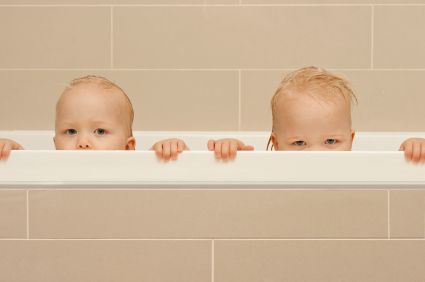
My twins were born in the midst of RSV season and because they were little and a bit premature, our pediatrician strongly suggested that we lay low until our two month vaccines. Added on to my three months of bedrest, this amounted to five months stuck in the house. When we finally got the ok to head out, I was thrilled. My mind raced with all the possibilities, but I quickly realized that the logistics of heading out with two babies are a bit overwhelming. In addition, every program for moms and babies that I read about, seemed specifically suited to having one baby.

If these are your first babies, you, too, may have fanticized about all the fun things that you would one day do with baby. Don’t fear, there are still many programs that can be adapted to twins and as twins are becoming more and more common, chances are these programs have accommodated twins before. Your best bet is to do some research, talk to other twin moms, talk to the people that put on the programs and try to arrange a free trial session (many programs offer a free first visit) so you can ensure that the logistics of participating with twins are manageable. Also watch that you are not being short changed because you have twins. For example, my local community centre had a music class for moms & babies. When I called about enrolling my twins, they told me that I would have to pay for two babies. After looking through the program calendar, I realized that there was a similar program for mom, baby and an older sibling. This program was cheaper than paying full price twice for the mom & baby music group I had inquired about. I called back and pointed out that they offered a discounted sibling rate for an older sibling and so it was only fair that my twins also receive this same group price. They agreed.

Here are some ideas for getting out with your twins. Most of these programs (unless otherwise noted) can be participated in (with a little juggling and a sense of humour) by yourself with two babies:

  • Mom & Baby Group – many communities have a free local mom & baby group where you can meet with other new mothers in an informal setting. Other moms are often more than willing to give you an extra hand if both babies need tended to at the same time.
  • Gymboree – Our local Gymboree class had accommodated twins before and the nice part was that we only had to pay for one baby. An exersaucer was set up for the other baby to sit behind my shoulder during circle time. Our Gymboree suggests participating with one baby for two weeks in a row and then switching and participating with the other baby for the next two weeks. This allows each baby to experience repetition of the program – an important part of the Gymboree curriculum. Call ahead to book a trial visit and let them know that you are bringing twins.
  • Salsa Dancing – This class worked well when the babies were about three months old and would still sit fairly contently in their infant carriers. I would feed the drowsier baby and put her facing the class in her infant carrier. Something about the salsa music seemed to lull them to sleep. I would then participate with the other baby in the baby bjorn. Instructors who don’t have a baby of their own, will probably offer to dance with one of yours.
  • Stroller Walking Clubs – These are often put on by professional baby program companies or local community centres – ours grew out of our Mom & Baby Group. A nice chance to walk and chat with other local moms.
  • Go to the Movies– Many theatres now have baby friendly movies. These movies are shown during the day, with reduced volume and are specifically meant for families with babies. They provide change tables and places to park your stroller. It is probably easiest if you can bring along another set of hands the first time.
  • Your local library – Most libraries have free baby programs where you can listen to stories, sing songs and meet with other moms and babies in an informal setting. These are fairly easy to participate in by yourself with two babies.
  • Community Centres – Programs at the Community Centre are meant to serve the community. They should be happy to accommodate a local mother with twins. If the program requires parent participation, often the program leader will happily use one of your children for demonstration purposes, thereby allowing both babies to get the full benefit of the program.
  • Mom & Baby Yoga – These programs are often offered by your local community centre or by professional yoga studios. This is another program where the class leader will usually be willing to take one of your babies for demonstration purposes. This program is easier to participate in with younger babies that aren’t yet mobile.
  • Baby Sign Language Courses -Our local classes are offered on a “per family” basis so no need to pay extra for twins.
  • Swimming – OK, there are some programs where you just can’t avoid the need for two sets of hands. Swimming is one of them. Luckily our local pool offered baby classes in the evening and on weekends so we were able to bring Dad or Grandma along.
Share:

Watching the News with Kids When there's a Crisis in the World

grow, LIVE By August 9, 2011 Tags: , , , , No Comments

The world is a big, scary place, and as our kids grow up we know that they need to understand that…but we’d really rather protect them from the bad things that happen. Unfortunately, in this information-heavy society it is impossible to hide unpleasant things from kids forever. After all, when Osama bin Laden was killed, Twitter and Facebook lit up with young kids asking, “Who the heck is Osama bin Laden?” If they don’t hear things from you, they will hear things from others, and by controlling the situation you make sure your child gets the right information in the right way. Here are some age-group appropriate tips to watching the news with kids when there’s a world crisis or serious event happening.

Younger kids (8 and under).

This age group is very limited in their grasp of the fact that there is a larger world beyond their small orbit. They will hear other adults talking and hear snippets of news, and they will be confused by much of what they hear. They also have a hard time distinguishing what they see on TV and the internet from reality, which is why scary movies and shows bother them so much: they think it’s real! This age group might not benefit from watching a news broadcast with you, because the images might frighten them in the case of natural disasters or violence. If they ask questions, explain things to them in simple terms: “Some groups of people are really mad at each other and are fighting each other. But they are very far away, and there is no chance anything they do will hurt us.” Or, “Sometimes big storms and bad things happen in nature, but we are safe here right now.” Don’t go into too much detail or you risk scaring them; on the other hand, don’t make promises you can’t keep. Unfortunately, things happen when they are least expected.

Tweens. This age group is insatiably curious about everything. They are mentally and emotionally coming into their own, and are really beginning to grasp the enormity of the world—and that bad things do, indeed, happen. They can even be morbid at times, fixating on death and destruction. This is a crucial time for parents to begin connecting with their kids on a mental level, because they need your guidance more than ever. Watch the news with them, and try to explain things as clearly as possible. Use the time as an opportunity to have a discussion, but don’t lecture or you risk boring them. Sometimes TV news may be too graphic, so switch to the newspaper or magazines for lower intensity. If you run across an issue you don’t understand well, take the time to explore the issue together. This cultivates the understanding that parents are humans, too, and that you are approachable and don’t think you are perfect.

Teens. By this age, the child should be well on their way to having their own personal and philosophical beliefs, which you helped to formulate. Discussions about the bad things in the world should come organically, and should be used as chances to firm up your relationship and deepen your understanding about how your child thinks.

As with many mature subjects, pay close attention to your child, and whenever possible, watch with them.  Discuss, and make them feel secure in their own environment.

Share:

The Best Kids Cookbooks

books, eat, GEAR, LIVE By July 17, 2011 Tags: , , , , No Comments

Kids love to create, and so by extension they love to cook. Cooking is both science and magic, producing edible wonders. Cooking for kids should be age-appropriate and easy to do. Here are some of the best kid’s cookbooks for sharing fun time in the kitchen with your brood.

Best All-Purpose Cookbooks

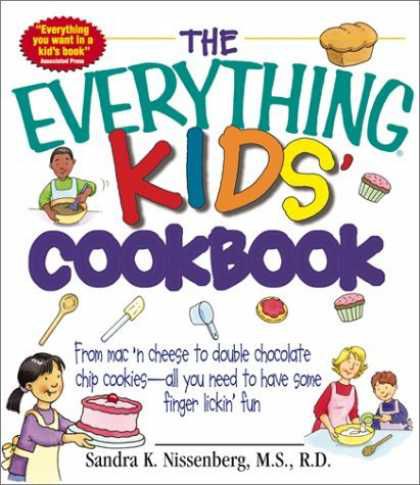
The Everything Kid’s Cookbook: From Mac’n Cheese to Double Chocolate Chip Cookies-All You Need to Have Some Finger Lickin’ Fun, by Sandra K. Nissenberg. This cookbook is packed with easy recipes of every kind, from snack and appetizers to main courses and desserts, as well as fun activities like puzzles, cooking tips, and even trivia. The language is very simple and direct, and is ideal for younger children. The recipes are generally healthy and low-fat, with nutrition facts and calorie counts for each one.

Share:

Watching the News with Kids When There’s a World Crisis

grow, LIVE By May 13, 2011 Tags: , , No Comments

Mass shootings, terror attacks, North Korea…The world is a big, scary place, and as our kids grow up we know that they need to understand that…but we’d really rather protect them from the bad things that happen. Unfortunately, in this information-heavy society it is impossible to hide unpleasant things from kids forever. After all, when Osama bin Laden was killed, Twitter and Facebook lit up with young kids asking, “Who the heck is Osama bin Laden?” If they don’t hear things from you, they will hear things from others, and by controlling the situation you make sure your child gets the right information in the right way. Here are some age-group appropriate tips to watching the news with kids when there’s a world crisis or serious event happening.

Younger kids (8 and under). This age group is very limited in their grasp of the fact that there is a larger world beyond their small orbit. They will hear other adults talking and hear snippets of news, and they will be confused by much of what they hear. They also have a hard time distinguishing what they see on TV and the internet from reality, which is why scary movies and shows bother them so much: they think it’s real! This age group might not benefit from watching a TV news broadcast with you, because the images might frighten them in the case of natural disasters or violence. If they ask questions, explain things to them in simple terms: “Some groups of people are really mad at each other and are fighting each other. But they are very far away, and there is no chance anything they do will hurt us.” Or, “Sometimes big storms and bad things happen in nature, but we are safe here, right now.” Don’t go into too much detail or you risk scaring them; on the other hand, don’t make promises you can’t keep. Unfortunately, things happen when they are least expected.

Tweens. This age group is insatiably curious about everything. They are mentally and emotionally coming into their own, and are really beginning to grasp the enormity of the world—and that bad things do, indeed, happen. They can even be morbid at times, fixating on death and destruction. This is a crucial time for parents to begin connecting with their kids on a mental level, because they need your guidance more than ever. Watch the news with them, and try to explain things as clearly as possible. Use the time as an opportunity to have a discussion, but don’t lecture or you risk boring them. Sometimes TV news may be too graphic, so switch to the newspaper or magazines for lower intensity. If you run across an issue you don’t understand well, take the time to explore the issue together. This cultivates the understanding that parents are humans, too, and that you are approachable and don’t think you are perfect.

Teens. By this age, the child should be well on their way to having their own personal and philosophical beliefs, which you helped to formulate. Discussions about the bad things in the world should come organically, and should be used as chances to firm up your relationship and deepen your understanding about how your child thinks.

Share:

Moving a Toddler from a Crib to a Bed

grow, LIVE By May 10, 2011 Tags: , , No Comments

When you move your baby from a crib to a bed it’s official: they’re not a “baby” anymore. When a child gets tall enough that they can actually reach over the crib bars it is time to move them into a bed, or else you risk dangerous accidents. But here comes the fun part: that child is no longer confined to a cage…er, crib, anymore. They can, and will, get up and move around, wander about, and come and find you. Frequently. How do you make the transition easier and faster?

Share:

How Do I Wean My Toddler off His Pacifier?

grow, LIVE By May 9, 2011 Tags: , , No Comments

Most parents must wage the “great battle of the binky” eventually, although many of them dread the prospect. Pacifier use is something that is a lot like politics: everyone has an opinion, but not everyone shares it. Some parents refuse to give their baby a pacifier. Others offer the pacifier to their baby as soon as they can. Yet others, in despair of ever sleeping again, try to get their child to use a pacifier, and it does not work for some reason, because the baby won’t take it. For those parents whose children grabbed onto their pacy and soon found it to be as indispensible as their diaper or their bottle, there is hope for weaning your toddler off the pacifier. That battle can be won—it just takes some patience, ingenuity and, sometimes, some subterfuge. 

Pacifiers aren’t “evil,” despite what the anti-binky purists say. Most kids will leave their pacifier behind on their own after a while, and those kids that use them don’t have long-term effects from having used them for a long time. Sure, there are some studies which link slightly delayed speech or self-soothing habits to pacifier use, but it isn’t as if the child were bungee jumping or swimming with sharks. However, when your child has pitched a major tantrum in a very public place because they left their binky at home, you will want to end that dependency, as much for your sanity as theirs. Here are some tactics that have had success. Remember that every child is different, so there is no “magic bullet” to this pesky problem.

Share:
What Cleaning Products Are Safe to Use During Pregnancy?

What Cleaning Products Are Safe to Use During Pregnancy?

LIVE, pregnancy, wash By May 6, 2011 Tags: , , , , , , 2 Comments

Sorry, moms-to-be, being pregnant doesn’t mean you can’t use cleaning products.  (i.e. You can’t use pregnancy as an excuse to hire a maid—unless you just want to)  In years past, cleaning products were much harsher and more dangerous than they are now, but that doesn’t mean that everything is safe or recommended for use while pregnant. Luckily there are lots of options out there to choose from. Here are some helpful tips for knowing what cleaning products are safe to use during pregnancy.

Share:

Outside Toys in a Public Playzone?

LIVE, play By February 8, 2011 Tags: , , , , , , , , , , , , , , 1 Comment

Recently I took my youngest son, who is nearly two, to a cafe known for it’s “kid-friendly” play area and colourful cupcakes (his big brother was at preschool). I met a friend there for coffee, and a few kids were already making use of the place’s toys and activities.  Before we left the vehicle, I made a point of asking him to leave his truck in the car. “We don’t want another little boy or girl to take it home by mistake.” I said. He understood this because it is our habit – when going to a public play area we don’t take “outside toys” in with us.  Why risk a problem when we can avoid one?

Share:
Waldorf schooling for your child

Waldorf Schooling for your Child

grow, LIVE By January 31, 2011 Tags: , , , 4 Comments

Waldorf schooling for your child emphasizes the role of the imagination in learning, developing thinking that includes a creative as well as an analytic component. Studies of the education describe its overarching goal as providing young people the basis on which to develop into free, moral and integrated individuals, and to help every child fulfill his or her unique destiny

Share:

The Top Movies for Mommies

LIVE, play By November 18, 2010 Tags: No Comments

Needing some Mommy-inspiration?  Grab some fluffy slippers and flop on your sofa.  You don’t even need lipgloss to check out these flicks.  And if you’re interested in getting into a real theatre to see a new release, you needn’t fret.  Many cinemas have implemented programs to enable you to come with the babies and kids.  You might not be able to hear a pin drop, but at least it’s a dark and comfy place to breastfeed!  Be sure to check out Movies for Mommies, Stars and Strollers, and Vids for Kids.

Share: