


I caught wind of these things and I absolutely had to see for myself – Milkscreen test strips. Created for the mom that wants to enjoy an occasional drink but make sure she is not passing any alcohol onto baby, Milkscreen test strips are the first ever at-home tests to identify the presence of alcohol in breast milk.
Alcohol can pass through the body into breast milk. About 2% of the alcohol you consume will enter your bloodstream and breast milk. Because everyone metabolizes alcohol differently, the amount of time it takes for the alcohol to leave your breast milk also varies. The only way to know for sure that alcohol is not present is to test the breast milk.
Yeah – I was always a bit rude to servers who refused to give me a glass of wine if I had a baby in my arms. Pump and dump? Really? (That’s not a solution. Alcohol is not trapped in breast milk. It is funneled through breast milk just as it is through your bloodstream, and pumping and dumping will just make you produce more milk a few hours later and feel uncomfortable.).
Anyway. I am an advocate of a breathalyzer in a car, and think a strip that tells you if you should or should not breastfeed is great. Any tool that can facilitate you being a responsible parent is amazing. It’s so good to have tests to know whether you are physically doing well, especially when you want to do the best you can for your baby.

Some women breeze through pregnancies with no trouble at all, or at least they weather the symptoms with few complaints. Some women, however, have a harder time of it. There are many reasons why you could have a difficult pregnancy (as in, one rife with negative stuff), such as twins or other physical issues, but doctors honestly don’t know what a lot of them are! Regardless of the why, here are some tips on the how of managing a difficult pregnancy.
Morning Sickness…Afternoon Sickness…Night Sickness…
Most of us experienced some nausea during our pregnancies; I know during my first, with my daughter, I felt like I was carsick all the time: completely and utterly miserable, the idea of food gagged me…but I couldn’t actually vomit, which might have brought on some relief. The only thing I could manage to eat were baked potatoes, with nothing on them but a little sour cream. Then, I hit the second trimester and it changed overnight, and I could eat whatever I wanted…and I did. With my sons, I had nothing but a little nausea, nothing serious. However, some women have a condition called hyperemesis gravidarum, where they can’t choke anything down for extended times, and it can extend throughout the pregnancy. This can be dangerous, because your body and that growing baby need lots of fluids and nutrients, and persistent nausea can mess with your electrolyte levels, leading to serious complications. How to deal with it?
See your doctor. He or she will probably try to let the nausea run its course for a little while, but if you’re unable to keep fluids down, persist and don’t let the doc blow off your symptoms. They will have to put you on IV fluids and nutrients for a little while, and may prescribe antiemetic drugs to see if that reduces the vomiting. Hyperemesis gravidarum usually resolves itself by 20 weeks.
Premature Labor
Some babies just want to come out early. Perhaps you have twins, or an “incompetent cervix” or are just prone too pre-term labor. You get confined to bedrest, maybe only a few months into your pregnancy. What do you do?
Keep busy, and obey the doctor. I know from experience, bedrest sucks. Sure, you think at first enforced naptime is awesome, but then the cabin fever sets in. You may get uncomfortable if you’re further along or carrying twins (amazing how lying down can cause the back and hips to ache). You begin randomly Googling your condition, then move on to the topic of problems in pregnancy, then into the scary realm of birth defects and such…and then you’re freaked out. The only thing to do is to give yourself something constructive to do.
- Write, read, sketch, try to work from home if you have that option.
- Limit your internet usage—ban sites on pregnancy and anything health-related.
- Do exercises for the bed-bound (approved by the doctor, of course), such as leg lifts, ankle circles, bicep curls, etc., to keep busy and keep fit.
- Pick up a new hobby that keeps your hands busy: cross-stitching, knitting, and crocheting are excellent; puzzles; you can even try your hand at making models, which your hubby and boy children would love to help with.
- Play games: keep your phone and laptop handy for solo gaming; invest in a deck of cards, a set of dominoes, and some board games to play with your family.
- Watch movies and TV—but try to keep it lighthearted.
Body Freak-Outs
This is a catch-all category that encompasses all manner of difficulties, such as:
Hemorrhoids
- Try to be careful when you go to the bathroom, meaning, don’t strain.
- Sit on a pillow (yes, you may need to invest in one of those donut pillows; all the moms will understand
- Sitz baths, hemorrhoid creams, and witch hazel soaked pads are all tremendous reliefs
- Lie on your left side with a pillow between your knees, or sit leaning to one side or the other, not directly on your rear end.
Acid Indigestion/Gas/Heartburn/Constipation
- It sounds like a simplistic suggestion, but it’s the most effective: don’t eat spicy foods or those that can cause indigestion, like too much citrus or acidic stuff like tomatoes or onions. Some women find that milk products aggravate their indigestion, too.
- For gas and indigestion, avoid too many high-fiber foods that may cause bloat and gas, such as broccoli and whole grain cereals, although these are good for helping with constipation.
- Don’t eat at night. When you eat and lie down acid can easily escape the stomach, owing to the hormones your body is secreting to relax your connective tissues.
- Take OTC remedies like Tums, which also give much-needed calcium
- Lie on your left side with a pillow between your knees. This not only improves circulation, it also helps with digestion.
- Lie on your back but with a pillow in the small of your back, propped up, so the excess acid doesn’t have the opportunity to use a prone position to creep up your esophagus.

“He took my toy!”
“She pulled my hair!”
“I hate the baby! Can you please put her back?”
The cries echo through your home, each syllable grating on your nerves. At first, you try to be sweetly reasonable…but as the fighting, bickering, and whining continues and actually escalates, you not only get more shrill and unreasonable in your replies, you start seriously wondering WHY you had more than one child in the first place. If you’re dealing with an older child and a newborn addition to the family, it can be heartbreaking: they loved the baby when he or she was in your tummy and right after you brought the little bundle home. Now, once the older child has started realizing their “mommy time” has been effectively reduced, the green-eyed monster of jealously rears its ugly head.
So how do you defuse sibling rivalry?!
If you’re like me, when you found out you were having twins, it was both a complete shock and a major adjustment to your life. My family size went from a comfort 4 (mommy, daddy, daughter, son) to a very crazy and gender-unbalanced 6 (mommy, daddy, daughter, 3 sons). But aside from that adjustment, I made so many mistakes as a mom of twins it’s not even funny. Although I had 2 kids already, I flubbed it by not thinking how different twins would actually be. So please, listen up and practice what I didn’t preach, it’ll save you time and many gray hairs!
The mistakes new moms of twins often make:
1. Not having enough stuff. When you find out you’re blessed with twins or even more, start stockpiling. Seriously. Diapers, wipes, formula, clothes, equipment…whatever. Even if the diapers and clothes are too big, take them, because your babies will grow and they will fit eventually. Shop in bulk. Go in on package deals with friends and family. Believe me, you’ll need it all. Having plenty means an immeasurable amount of peace of mind, and that’s priceless.
2. Skipping naptime. No, not baby naptime–your naptime! You need to be sleeping when they’re sleeping. Heck, sleep when they’re awake if you can! If you’re nursing, it’s especially important, because milk supply is adversely affected by poor sleep habits and stress.
3. Not having the right equipment. You may think you can skip the twin stroller, but you’re wrong. You need it. Also, make sure you have the right kind. If you can afford it, get 2: one side-by-side for wide-open spaces like for taking walks outside, and one tandem for things like shopping, where your space and maneuverability is limited. Sometimes you’ll have to take the babies out alone, and you’ve never been through the hell that is having to hold one twin while trying to drive the other in a regular stroller. NOT recommended.
4. Getting your babies confused. I confess, I didn’t have this problem that often, as far as confusing them with each other, since my boys are fraternal. However, I DID get confused, constantly, about who’d been recently changed, who was nursing when, etc. I ended up doing things like carrying around a washable marker, which I used to dab a little mark on the foot or hand of the twin that had recently been fed or whatnot. I also used the same tactic with my own breasts…juggling two boys on opposite schedules, I forgot which breast had been nursed from last…ack.
5. Being nitpicky and obsessed with perfection. Face it: your house will get dirty. The laundry will go un-folded, the dust will accumulate. Let go of your OCD-based standards, especially if you have older kids adding to the chaos. Embrace reality: your house doesn’t need to be a fashion plate. What can’t be postponed is your twins’ childhood. They’ll only be tiny for so long. Cherish every moment, which is so much more important than keeping your drapes dust-free!
6. Forgetting about yourself. What I mean is, you’re not just a mom of twins or whatever. You’re a woman, you’re YOU. Take some time to remember that. Take off the spit-up encrusted shirt and shower. Put on something pretty, even if it’s just to lay on the couch. I recommend asking hubby for a nice silk bathrobe, a short one, the kind that makes you feel like a princess…or a geisha…whenever you wear it. Shower. Brush your teeth and hair. Take a walk, see the sky, have a meal that doesn’t involve “here comes the train!” or sterilizing bottles.
7. Not getting support. This is a broad one. At home, get as much support as possible, from friends, family, neighbors, whatever. Accept any and all offers to cook, clean, carpool, it doesn’t matter. It also means, seek shelter and advice from other moms in your position. Twin resources abound, and other proud twin moms love to support each other and share their experiences and advice.
 Moms and dads of twins think their kids are awesome and special, and the general world is fascinated by the subject. As the mom of a set of fantastic little fraternal boys, I thought, in honor of their upcoming birthdays, I’d post some fun twin facts for us all to enjoy!
 Having twins is a big responsibility. For many moms, it’s also a complete shock–and they’re dismayed and worried about how to deal with a multiple pregnancy.
 I know. It’s late, you’re tired, you’re wearing scruffy old clothes..heck, you may even smell funny, because you’ve been postponing your shower since “something” always comes up at the last minute. Bed is looking mighty fine. The quiet time after your kids have finally conked out…priceless. As you head for the pillow, you feel something akin to joy at the idea of being vertical for a while. Then you look at your dear husband and you see the “come hither” look in his eyes. First thing that crosses your mind: “Is is insane??” Second thing: “Oh, no.” In roll the excuses, ranging from a fake headache (or a real one) to your stinkiness. But why?
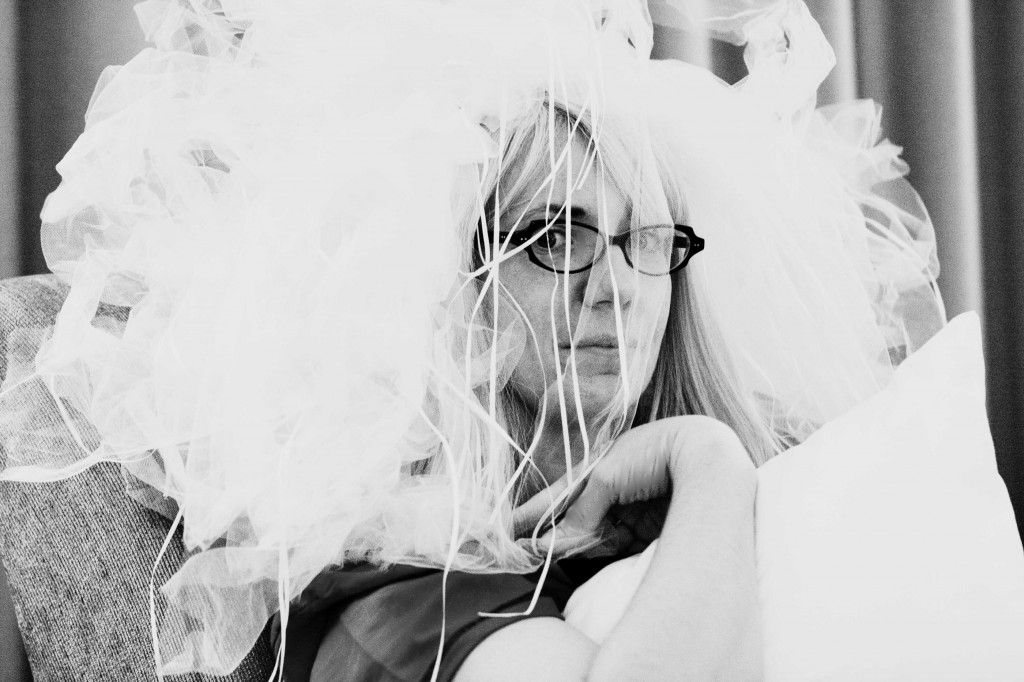 Catherine is a mother, writer and recovering academic who recently contributed to Canada’s brain drain by relocating to New York City. She’s the Director of Community and Social Good at Babble, the author of HerBadMother.com and a freelance writer who writes, sometimes, about surviving motherhood, sometimes about surviving womanhood, sometimes about trying to make the world a better place, and more often than not about her belief that bad is, really, the new good. (She really does believe that bad is the new good. She wrote a Manifesto. She’s that committed.)
One of the hottest tickets to get in Toronto this fall is for BlissDom ’11 (it sold out in 45 minutes) and of course, Catherine brought it to Canada from it’s US roots. She approached Barbara Jones a few years ago about throwing a social media conference for women in Canada. We plotted for some months before she said, ‘you know, why don’t we just make this a Blissdom conference?’ I thought that was an awesome idea, and the rest is history 😉
According to Catherine, it is important to have a BlissDom conference in Canada because there’s a large and dynamic community in Canada of women who are deeply engaged with social media, and there hasn’t historically been any place for them to network and build community. There have been social media conferences and events for women in the US since 2005, and those are all great events, but Canadian women want and need, I think, a place where they can approach these conversations as Canadian women.
Tidbits on Catherine:
Favourite place to travel: 1. back home to British Columbia to visit my family. 2. New York City (which will soon become home, so I will have to find a new number 2 ;))
Cannot-live-without gadget: iPhone
Go-to ‘Mom’ attire: When I’m working at home: yoga pants, white t-shirts and Toms shoes. When I’m working out of the offices in New York: not yoga pants
Favourite kid-friendly dinner to make: Mac and cheese
I’m reading: Lev Grossman’s The Magician King
My kids are reading: Eloise
My kid’s birthday party this year will involve: New friends in New York City and a cake shaped like ‘the lady statue’ (Statue of Liberty), in honor of our new home.
In Catherine’s spare time, she practices talking about herself in the third person. She’s getting pretty good at it.